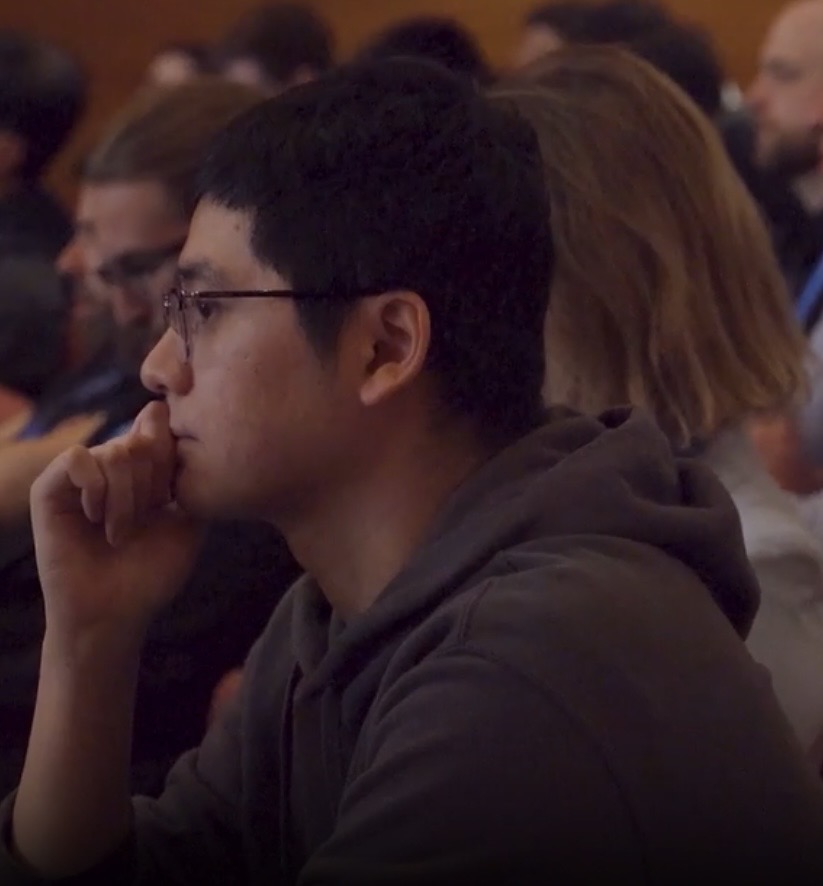
I graduated with a Ph.D. in August 2026 and am now working as an Embodied AI Researcher at DH-Robotics.
I earned my Ph.D. in the Dept. of Computer Science & Engineering at HKUST, advised by Prof. Nevin L. Zhang, and was a recipient of the Huawei PhD Fellowship (HKUST).
My research focuses on the real-world application of deep vision and vision-language models, with emphasis on explainability, generalization, MLLM-based agentic visual perception, and controllability in image editing.
In general, I aim to develop diagnostic tools to understand what models currently depend on, and targeted mechanisms to guide them toward causally relevant, trustworthy, and efficient behavior.
Vision-Language Models, MLLMs, and Agentic Visual Perception
Multimodal LLMs may rely on language priors rather than pertinent visual evidence, especially on long documents. I explore agentic perception frameworks that gather evidence iteratively to improve accuracy and efficiency.
-
InSight-doc: Agentic Visual Perception for Long-Document UnderstandingEMNLP, 2026Replaces fixed-resolution, single-pass pipelines with iterative perception that selectively acquires high-resolution crops on demand.
Controllable Image Editing and Generation
Controllable editing requires precise spatial and semantic guidance without costly retraining. I develop training-free methods that combine structural control with flexible prompt guidance.
-
CannyEdit: Selective Canny Control and Dual-Prompt Guidance for Training-Free Image EditingIEEE CAI, 2026Enables selective edge-based structural control with dual-prompt guidance for training-free, controllable image editing.
Robustness, Domain Generalization, and Adaptation
Foundation models can lose robustness during fine-tuning and fail under distribution shift. I design training objectives that anchor decisions to invariant, generalizable features.
-
Consistency Regularization for Domain Generalization with Logit Attribution MatchingUAI, 2024Logit Attribution Matching (LAM) anchors predictions to domain-invariant causal features.
-
Dual Risk Minimization: Towards Next-Level Robustness in Fine-Tuning Zero-Shot ModelsNeurIPS, 2024Combats robustness vanishing during foundation-model fine-tuning via dual risk minimization.
Trustworthy and Explainable AI (XAI)
Deep classifiers often rely on spurious correlations rather than causally relevant visual evidence. My work develops explanation methods that diagnose misaligned dependencies and surface discriminative rationales.
-
ViT-CX: Causal Explanation of Vision TransformersIJCAI, 2023Estimates the causal effect of semantic patches on Vision Transformer predictions.
-
Two-Stage Holistic and Contrastive Explanation of Image ClassificationUAI, 2023Introduces CWOX, which explains top-K labels by contrasting visually confusable competitors.
-
Example PerplexityarXiv:2203.08813, 2022Proposes a diagnostic measure for assessing how well a model captures training-example structure.
Education
-
Hong Kong University of Science and TechnologyPh.D. in Computer ScienceSep. 2022 - Aug. 2026
-
Hong Kong University of Science and TechnologyM.Sc. in Big Data Technology (CGPA 4.11/4.3, Rank 5/120)Sep. 2019 - Dec. 2020
-
Hong Kong Baptist University (HKBU)B.S. in Statistics (CGPA 3.51/4.0, Rank 3/70)Sep. 2015 - Jun. 2019
Honors & Awards
-
Huawei PhD Fellowship (HKUST)2022–2026
-
MSc Big Data Technology Top Students Award (HKUST)2020
-
School of Engineering Excellent Student Scholarship (HKUST)2020
-
Teaching Assistant, Postgraduate Machine Learning (MSBD5012 / CSIT5910 / COMP5212)2022 Fall, 2023 Spring, 2023 Fall, 2024 Fall, 2025 Fall
-
Teaching Assistant, COMP2011 Programming with C++ (UG core course)2024 Spring
-
Co-supervised 15+ Master's independent projectsMost students received A-level grades
- UAI 2024 Top Reviewer
- NeurIPS (2023–2026)
- ICML (2023–2026)
- ICLR (2024–2026)
- UAI (2024–2026)
- AAAI (2025–2026)